 LinkedIn
Your best PPC landing page may be your worst candidate for a Google AI Overview citation. I keep seeing teams treat the overview like a new ad slot: buy an “AI optimization” tool, point it at the page with the biggest demo form, and wait for placement. That page was built to persuade a paid visitor to act. An AI Overview needs passages it can pull into an answer. Those are different jobs, and most software sold as the fix monitors the gap rather than closing it.
Myth 1: “Your best-converting landing page is your best shot at an AI citation”
I understand the instinct. If a dedicated landing page converts 12% of paid traffic into pipeline, it seems reasonable to call it the clearest page on your site. People trust it enough to schedule a demo or enter their corporate card. Why wouldn’t Google quote it?
Because a page can be excellent at persuasion and poor at answering a question. A paid visitor may already know what they want. The page needs to match the ad, handle objections, and make the next step obvious. An AI Overview has to assemble an answer from passages it can understand without that journey.
As research on structuring landing pages for AI citation explains, abstract slogans, social-proof carousels, and gated specifications give an answer engine little to extract. A direct answer beneath a descriptive heading does more useful work: it states what the product does, where it fits, or what a buyer needs to know in two or three sentences that stand on their own.
I’m not telling you to delete the conversion page. I’m telling you not to mistake its conversion rate for evidence that it answers the questions behind a search. Keep the form; put the answer where it can be read.
Myth 2: “Running Google Ads gives you an edge in organic AI Overviews”
This is an old PPC superstition in a new jacket. Clients used to tell me that pausing their Google Ads budget had wrecked their organic rankings. Now the claim is that spending on search ads makes Google more likely to cite their landing pages in an AI Overview. If you’re used to pay-to-play distribution, it has a certain grim logic.
It is still the wrong mechanism. Google’s documentation on ads in AI Overviews describes sponsored placements in or around AI Overviews as ads served through the usual auction machinery. Buying an ad placement is not buying an organic citation. A $50,000 monthly paid-search budget does not turn a sales page into a useful source paragraph.
The distinction matters when you decide what to fix. If an ad is underperforming, inspect the auction, targeting, copy, and landing-page conversion path. If the page is not cited in an organic answer, inspect whether it contains a clear answer worth extracting. Moving money between campaigns will not write that paragraph for you.
Myth 3: “Adding custom Schema markup unlocks AI Overview citations”
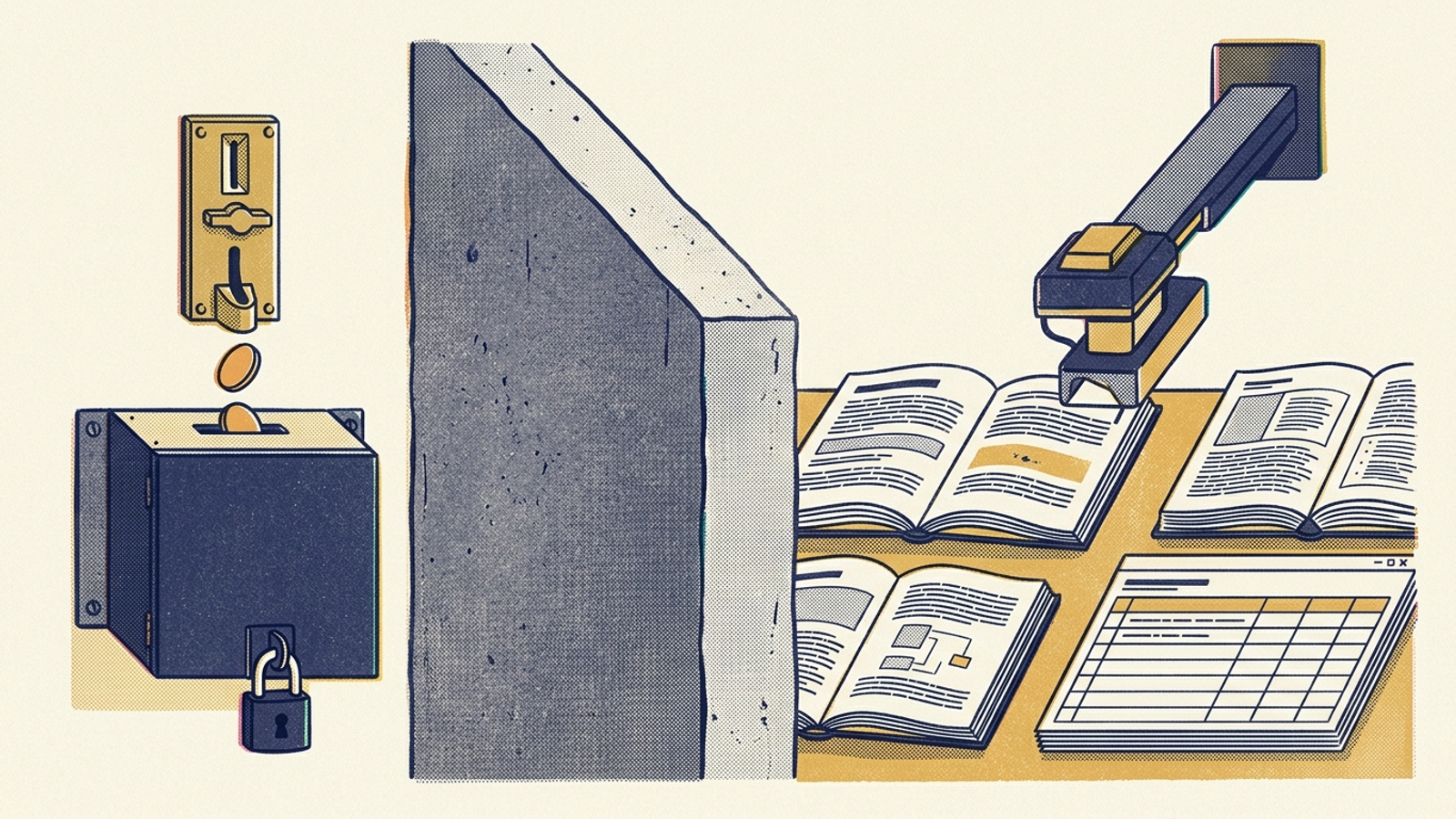
Whenever search changes, someone offers a proprietary markup recipe. This time the pitch is that a carefully nested TechArticle, FAQPage, or custom entity graph translates your page into a language Gemini prefers. It sounds technical, which makes it easier to invoice for.
Google Search Central’s documentation on AI search features says there is “no special schema.org structured data that you need to add” to appear in AI Overviews or AI Mode. Structured data still has uses in search. It just cannot supply an answer your visible page never states.
If your pricing detail sits behind a demo form, or your product description says only “Accelerate your workflow,” an invisible JSON object does not make either one a useful citation. Write the factual answer in visible page copy first. Treat markup as markup, not a substitute for the page.
Myth 4: “AI crawlers ignore robots.txt anyway, so technical hygiene doesn’t matter”
I hear two versions of this one. In the first, AI crawlers ignore your site’s instructions, so checking access is a waste of time. In the second, blocking Google-Extended keeps a page out of Google Search’s AI answers. Neither gives an operator a sound plan.
Google’s explanation of search AI features and webmaster controls distinguishes Google-Extended from controls for Google Search. Blocking Google-Extended is not the switch for AI Overviews or AI Mode. Standard Search controls, including nosnippet and max-snippet, govern how content can appear in snippets. Blocking Googlebot affects ordinary organic visibility too. That is a steep price to pay for guessing at which bot does what.
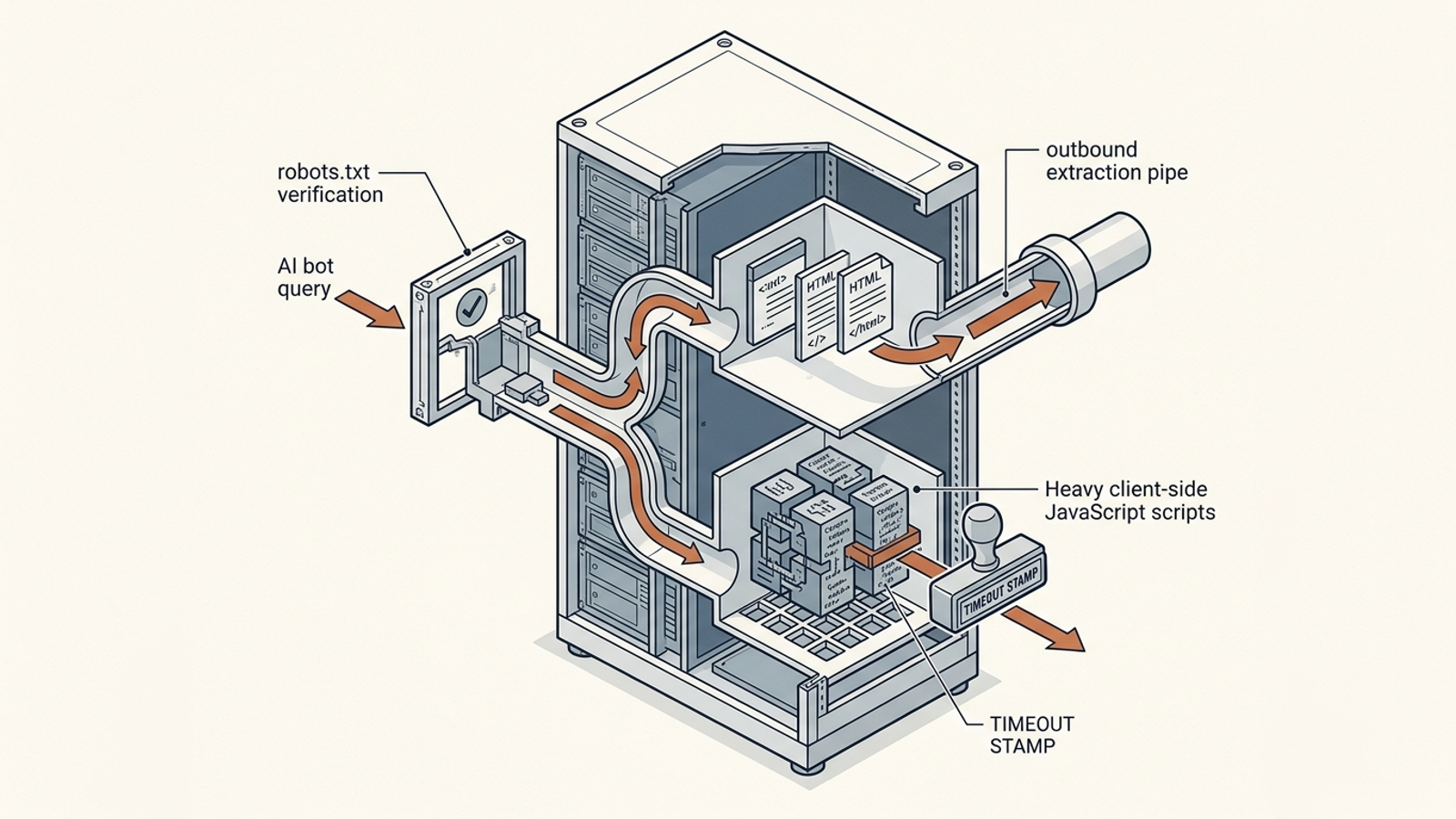
The less glamorous problem is often the one worth checking: can Google fetch and read the answer on the page? If the server returns an error, bot handling gets in the way, or the useful text appears only after client-side JavaScript runs, your carefully worded passage may not be available when a search system needs it. A decorative animation does not help a crawler find a product limitation buried inside it.
Check access and the rendered content before commissioning another markup project. Make the important facts available as readable page text. Technical hygiene will not earn a citation by itself, but a page that cannot reliably present its answer has little chance to compete for one.
Myth 5: “When your AI visibility score rises, your landing pages are getting featured”
A dashboard moves your brand from 42 to 68 on a proprietary AI Visibility Score. Someone puts an upward arrow in the board deck. It feels like progress because the number has two digits and a line chart.
The number may instead reflect automated prompts and scraped text mentions. As growth marketers discussing AI visibility reports point out, a brand appearing in a generated answer is not the same as a verified citation to a landing page. Repeated answers can change even when you have changed nothing. A score built from those answers needs careful interpretation, not applause every time it rises.
The reverse mistake is declaring victory after one citation. The draft’s study of AI search citations found substantial variation across repeated responses: only 30% of brands stayed visible from one response to the next, and 20% appeared across five consecutive runs of the same query. A citation is an observation, not a permanent placement.
Ask what the tool actually recorded. Was it a brand mention or a link to your page? Which query produced it? Did the cited page lead to Search Console impressions or downstream pipeline? If the report cannot answer those questions, it may be useful for spotting possibilities. It is not proof that your landing page is working.
Myth 6: “Rank #1 classically and the AI Overview citation follows automatically”
For years, the PPC and SEO dashboards made a tidy pair: buy visibility in one column, earn a top organic position in the other. It is tempting to add a third column for AI Overview citations and assume position one feeds it.
An Ahrefs study of 863,000 keyword SERPs and 4 million cited URLs complicates that assumption. Only 37.9% of cited URLs ranked in the organic top 10. Another 31.2% ranked from positions 11 through 100, while 31.0% came from outside the top 100 results in the study’s comparisons. A strong organic ranking can matter without guaranteeing that your passage is the one an overview uses.
Think about what the systems are trying to show. A traditional result points a searcher to a page. An AI Overview assembles an answer and may pull a passage that addresses one part of a broader question particularly well. A page built around one polished sales claim can lose that passage-level contest to a plain explanation on a less prominent page.
That is why, as we noted in our account of Google’s changing citation playbook, top-three rankings are not a complete defense of your visibility in generative search. Keep the ranking work. Then check whether the ranking page contains an answer worth quoting.
Myth 7: “You need one optimized landing page per target keyword, like an ad group”
This one came straight from a playbook I know well. A performance team makes a separate landing page for each close variation, changes a city or product modifier in the headline, and keeps the ad-to-page message match tight. For a paid click, that structure can have a purpose. For an AI answer, fifty thin pages repeating the same pitch create fifty versions of the same omission.
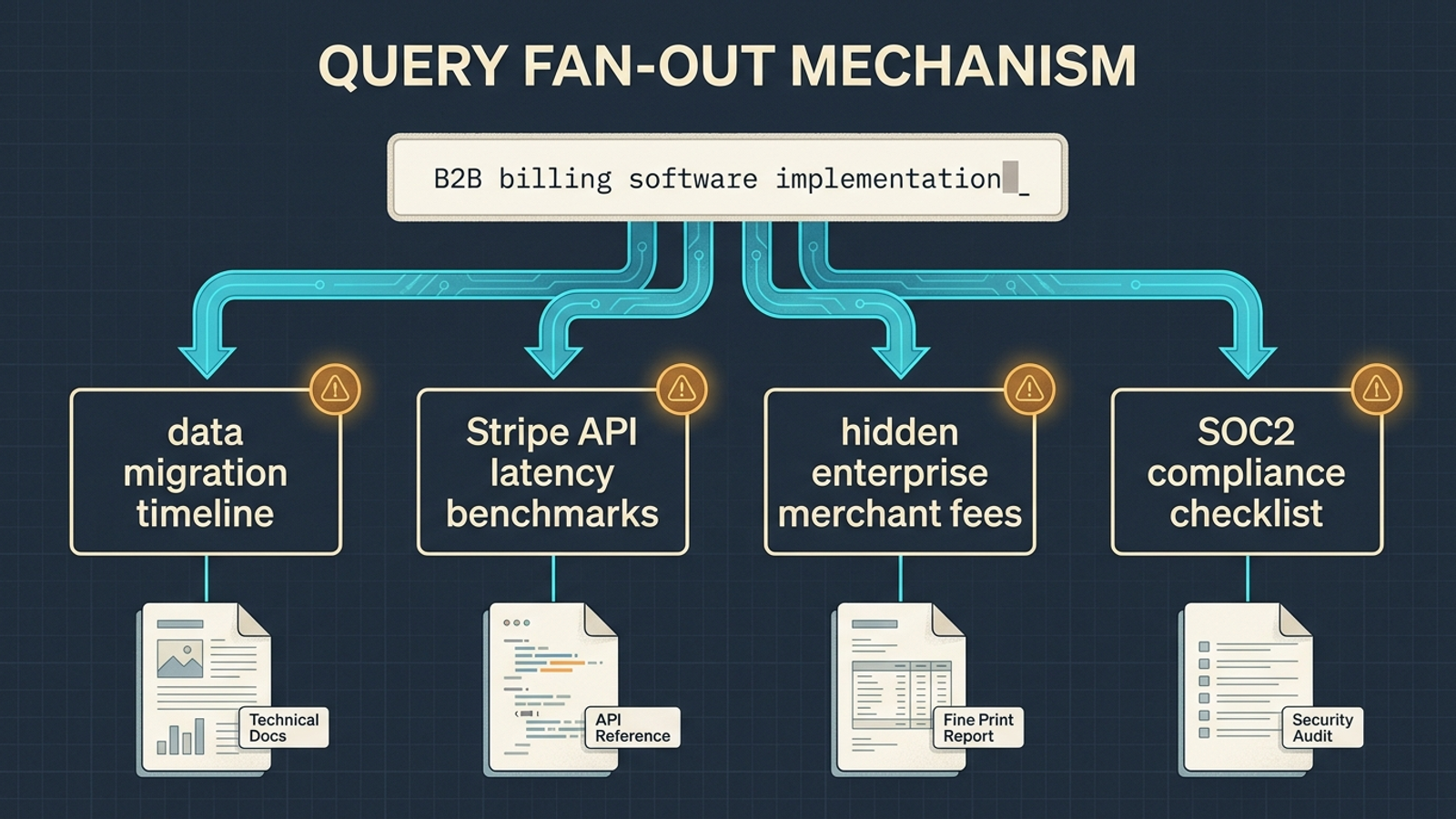
Conductor’s explanation of query fan-out describes how an AI search system can break a prompt into related sub-queries before assembling its response. A buyer’s question about software may lead it toward pitfalls, pricing, integrations, and edge cases, not merely variations of the original keyword. A page that only echoes the headline has little to offer those adjacent questions.
I would rather build one resource with clearly separated, factual sections than multiply pages that all end at the same demo form. Start by finding the questions behind the query. Then give each answer a heading and a passage that makes sense on its own. If a limitation belongs in the answer, state it. If the price requires a conversation, say what a reader can know before that conversation instead of hiding every useful detail.
Message match is not answer coverage. Use the first to serve the paid visitor. Use the second when you want a page to contribute to a synthesized answer.
Myth 8: “Buying ‘AEO optimization software’ will optimize your landing pages”
This is the hardest one to kill because it promises to turn a new problem into a purchase order. Search for software to optimize landing pages for AI Overviews and you will find citation trackers, sentiment gauges, and prompt scrapers packaged as AEO optimization. A report arrives every week. Your page looks exactly as it did before.
Here is the test I give operators: what changes on the actual page because this tool exists? Does someone use its findings to edit a vague heading, publish a direct answer, expose specifications in readable text, or fix a crawl error? Or does the tool send an alert that your citation rate fell and leave the repair to you? Monitoring can tell you where to look. It cannot do the looking, writing, and publishing on its own merely because the sales page uses the word “optimization.”
Before you buy, test what an AI Overview tool actually ships in 30 days. Look for work you can inspect, not just a prettier account of the problem. A useful page pass has a short, concrete order:
- Find the missing answer. Read the questions your target search implies, then compare them with what the page actually says.
- Put the answer in visible copy. Use a descriptive heading and a direct factual passage instead of making the reader pass through founder storytelling, a carousel, or a demo form to find it.
- Check access. Make sure the server and page presentation do not hide that passage from Search.
- Review what happened. Separate verified page citations from brand mentions, then connect useful visibility to the outcomes you care about.
That is work, not a score. A platform that only assigns it to your team may still be a monitoring purchase, but I would not call the subscription a page optimization. The distinction is why groas positions itself as an autonomous growth engine rather than another dashboard: continuous search execution and a human strategist with ownership of the direction, not a queue of recommendations waiting for the next quarterly review. Any changes to a client’s website still need to be made through the right publishing process. No visibility chart can skip that step.
I understand why the software pitch survives. Buying a tool is easier than admitting your highest-converting landing page may not contain a quotable answer. But an alert will not rewrite a heading, make hidden details readable, or fix an inaccessible page. Monitoring is a spectator sport. Citations belong to the teams that actually change the page.