

 LinkedIn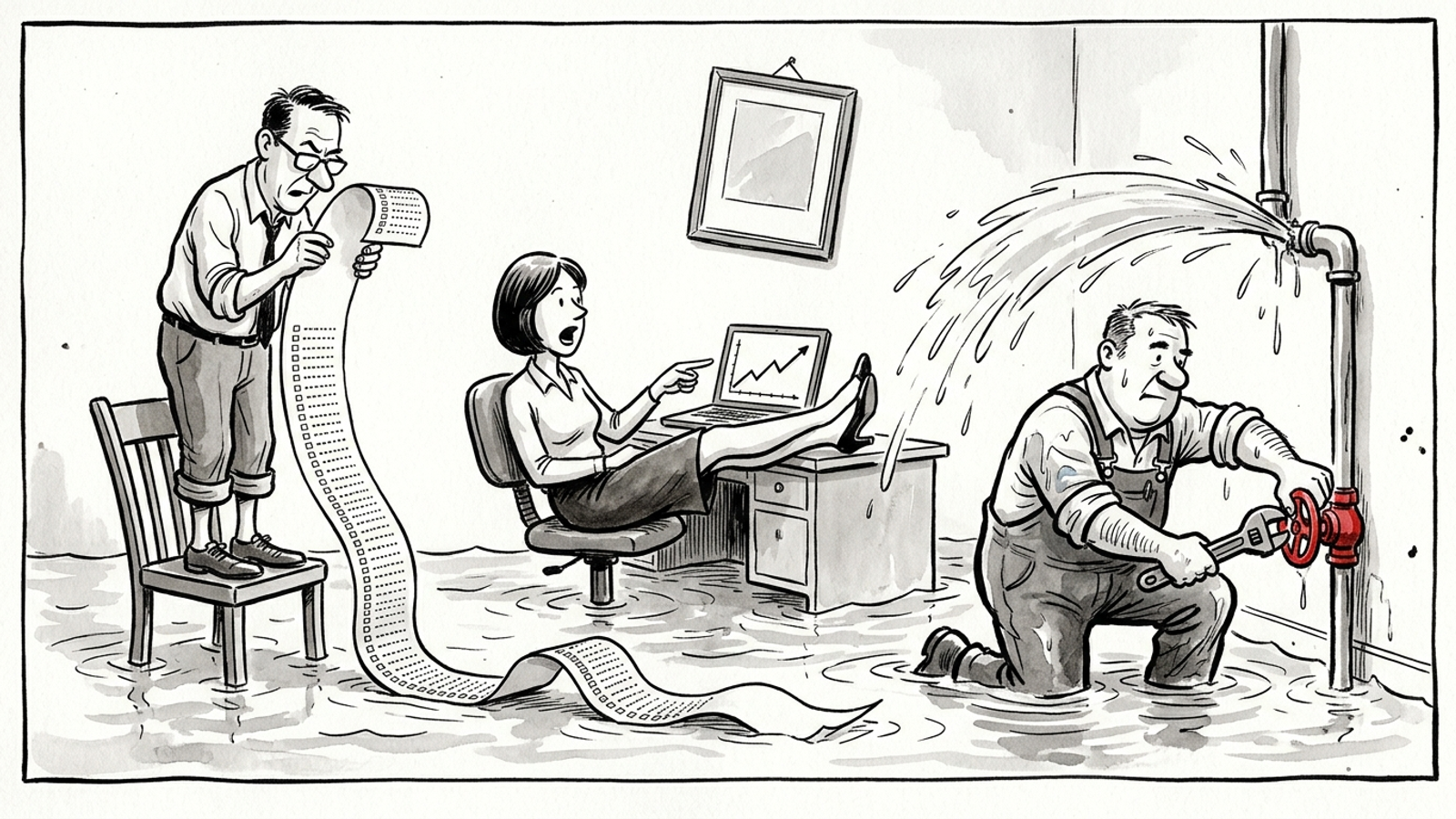
A 412-issue SEO audit will not get your page cited in an AI answer. If you own the website and need to fix what keeps AI engines from reading it, your choice is between a classic SEO crawler, an AI visibility platform and a done-for-you service like groas. The winner is not the option that finds the most problems. It is the one that gets the few important fixes shipped and verified.
I have run all three setups. The crawler finds problems but leaves the work to you. The tracker shows where you are missing but leaves the work to you. Done-for-you execution is the stronger choice when nobody on your team has the time or access to make the change. Here is how they compare on the five decisions that matter.
Why the 400-issue audit stalls
I used to tell clients a big audit was thorough. I was wrong. Audits often fail because nobody validates the findings, tool severity stands in for business priority, and tasks such as “improve site speed” sink into the dev backlog (how audits actually fail). I have watched a 50,000-row CSV do exactly that. Marketing forwards it. Dev asks which rows cost money. Nobody knows. Nothing ships.
For AI answers, the waste is especially obvious. Google says there are no additional requirements for AI Overviews and AI Mode: no special schema to add, just indexed pages eligible for a snippet. The immediate technical question is whether a bot can fetch the page and find a direct passage it can use. In one crawl of 3,014 local business sites, only 31% passed all four AI-ready basics; 19% had fewer than 120 words before JavaScript, and 45% had no business schema (the Houston crawl).
Your crawler can flag 400 things. A handful may decide whether the page can even be quoted. That is the shortlist I would work from.
Meet the three contenders
The classic SEO crawler: Screaming Frog or Sitebulb. Screaming Frog’s free version caps at 500 URLs; a paid seat is about $299 a year. It gives you crawl data, and you decide what to fix. Sitebulb goes further with around 300 plain-English Hints, prioritisation scores and crawl maps, starting at about $13.50 a month for Lite. Both can help you find a problem. Neither changes your site for you.
The AI visibility platform: Otterly, Peec, Profound or Ahrefs Brand Radar. These tools run buyer prompts on a schedule and report mentions, citations, share of voice and sentiment. Listed entry prices range from Otterly Lite at $29 a month to Ahrefs Brand Radar at $199 a month per index, plus its base plan. Peec Starter is listed at $95 a month and Profound Starter at $99. The common setup is tracking plus an audit panel, not code edits or published fixes. You can see who AI cites. Someone else still has to act.
Done-for-you execution: groas. It looks for blockers, then ships changes inside agreed guardrails: unblocking bot access, making primary content available in initial HTML, cleaning up canonicals, publishing direct answer passages and correcting structured data where useful. Actions are logged with their reasoning, and a named human owns the outcome. Because execution is part of the service rather than a ticket tossed over a wall, the fix can move when the blocker is found. That is the point of this contender.
Axis 1: Can it isolate the blockers worth fixing?
My first checks are bot access, rendering, canonicals, structured data and whether the page contains a direct answer passage. A crawler can flag problems across that list, along with plenty that have little to do with this decision. A visibility platform usually starts at the other end: who appeared in the answer, and who did not. Neither view alone tells you what change to ship first.
Rendering is an easy place to lose the plot. A page can look fine in a browser while its primary content is absent from the initial HTML an AI bot fetches. Compare raw and rendered HTML before you file a vague “AI visibility” ticket (why JavaScript pages go missing). Access can be deceptive too. In the Houston crawl, only 1.6% of sites blocked AI bots in robots.txt, while around 5% were effectively blocked after firewall 403s; GPTBot was blocked 9.8% of the time (bot-blocking data). A robots.txt check alone would miss the firewall problem.
Then inspect the passage itself. About 38% of AI Overview citations in one analysis came from top-10 organic results, with direct two-to-four-sentence answers in server-rendered HTML favoured (how passage selection works). Being technically accessible is the start, not a promise of a citation.
Do not let a missing-schema warning outrank an unreadable page. An Ahrefs test of 1,885 pages adding JSON-LD found small gains in AI Mode and ChatGPT and a decline in AI Overviews; a five-system test found that hidden markup could not substitute for visible text (what the schema test found). The crawler can report missing schema. The tracker can show a citation gap. The useful next step is to make the answer visible on a page the bot can fetch, then check it again. Buy a finder only if someone is ready to do that work.
Axis 2: Does it give you an order, or another list?
A crawler’s “critical, warning, notice” labels are not a revenue plan. I have seen 212 “critical” missing alt tags distract from one blocked template affecting 40 service pages. Sitebulb’s Hints, scores and crawl maps help you see a cluster of problems, but someone still has to turn Hint #47 into a decision: fix this template before those individual pages.
The visibility platform sorts a different way. It shows which topic lost share of voice and which competitor got cited instead. That is useful when you need to choose a topic. It does not identify the line of code preventing a bot from reading your answer.
Done-for-you execution has to connect the two: which fix affects a page that could produce pipeline, and what needs to change to make that page readable? I would start with a bot block, an unrendered passage or a wrong canonical before polishing a minor warning. Three ordered fixes beat 400 severity labels when the goal is to ship this week. If all you receive is a longer list, you still own the prioritisation problem.
Axis 3: Who is allowed to ship the change?
This is where the comparison stops being close. Say Screaming Frog finds GPTBot getting 403s on your pricing page. Who works through the firewall setting, checks access and republishes if the page also needs a clearer answer? With a crawler, that is your team. With a tracker, it is still your team, after you have paid to see the missing citation.
A ticket called “review bot access” can sit for six weeks because no developer wants an open-ended SEO favour. I have lived that wait. The bottleneck is often access to the site and someone allowed to change it, not a shortage of findings.
With groas, the change ships inside defined guardrails, and the action log records what changed and why. Execution is part of the service, not a hand-off. If your developer reliably ships SEO tickets in days, you may not need that service. If nobody owns the ticket, another diagnostic tool will not become an owner by magic.

Axis 4: What counts as proof that it worked?
A green checkbox in a crawler proves less than it looks like. Re-crawling can show that your HTML changed. It does not, by itself, establish that the bot previously getting a 403 can now fetch the page, or that the answer passage is in the HTML that bot receives.
I would check the sequence in order:
- Re-request the page as the affected bot and confirm the access error is gone.
- Compare raw and rendered HTML to confirm the direct passage is present in the response the bot can use.
- Check server logs, then run the buyer prompt again to watch for a citation.
That last step matters, but it is a different kind of evidence. A prompt result can change alongside content and competitor activity; a new citation does not neatly prove that one technical edit caused it. The visibility platform shows that result over time, but it is a scoreboard rather than a same-day check of the repair.
Done-for-you work closes the technical loop when the blocker ships: re-fetch, inspect the passage and log the change. It can test the prompt too, without pretending that a readable page is guaranteed a quote. If you want to run the sequence yourself, the step-by-step fix guide lays it out. No bot fetch, no proof of bot access. Pay for that check, not a report that merely says “fixed.”
Axis 5: What does it cost in cash and team hours?
On the invoice, the crawler looks cheapest: about $299 a year for a paid Screaming Frog seat, or Sitebulb Lite starting around $13.50 a month. The trackers listed above start at $29 a month and rise with the tier and coverage; Ahrefs Brand Radar also requires a base plan. Done-for-you costs more on the invoice, with a flat monthly fee rather than a percentage of spend.
Now count the hours. Say you spend $20k a month on search and your marketer earns $40 an hour. In this comparison, the crawler takes 6 to 10 hours to triage the CSV, write tickets, chase dev and re-crawl. A tracker adds 3 to 4 hours a month reading charts that assign no work. The ticket can still wait six weeks because dev has a roadmap.
Done-for-you asks for about an hour to review the work and approve changes inside guardrails you already set. Those are illustrative workloads, not a universal price calculation. The mechanism is straightforward: when execution and verification sit inside the service, your team spends less time shepherding a ticket. Cheap software becomes expensive when nobody has time to use its findings.
Scorecard: findings, fixes and proof
I score this the way I used to score ad copy: what shipped, what changed and what can you prove? The crawler wins on breadth. The platform wins on visibility reporting. For a team without someone to make changes, groas wins on the work between finding a blocker and checking the repair.
| Decision | Classic SEO crawler | AI visibility platform | Done-for-you (groas) |
|---|---|---|---|
| Find AI-relevant blockers | Finds them among many other issues | Shows citation gaps; mechanics are less central | Focuses on blockers it can act on |
| Prioritise the work | Tool severity; your team sets business priority | Prompts and share of voice; your team diagnoses the fix | Orders fixes around affected pages and outcomes |
| Ship the fix | Your team or developer | Your team or developer | Ships inside agreed guardrails and logs the action |
| Verify bot readability | Requires additional bot-specific checks | Tracks later citation results | Re-fetches as the bot and checks the passage |
| Team time in the example | 6 to 10 hours triaging and chasing | 3 to 4 hours reviewing charts | About 1 hour reviewing work |
Verdict: buy the work you are missing
Pick the crawler if you have a developer on call
If your developer ships SEO tickets in days, buy Screaming Frog or Sitebulb and keep the difference. You already have the scarce part: someone allowed to touch the site. Crawl it, filter for bot blocks, rendering gaps, bad canonicals and weak answer passages, then hand over a short ordered list. The crawler is the right buy when your team already owns execution. It stops being the cheap option when those tickets stop moving.
Pick the platform if you need a visibility scoreboard
If your boss wants to know where the brand appears in ChatGPT and Perplexity every Monday, buy the tracker. It can show mention rate, citation rate and which competitor appeared on a prompt. Be honest about the purchase: you bought a scoreboard, not a repair crew. I would skip it if you already know the brand is missing and nobody has hours to act on another chart.
Pick groas if nobody on your team will ship the fix
For the business owner or in-house marketer without a reliable dev queue, done-for-you is the winner. groas finds the blockers, ships changes within your guardrails and checks that the bot can read the repaired page. That does not guarantee a citation. It does get the work out of the audit and onto the site, where a citation becomes possible.
If you already have a developer on speed dial, pick the crawler. Everyone else should stop paying to watch the problem and start paying to fix the page AI needs to read.